Category: Uncategorized

  • Fort Sumter History: What Happened at Fort Sumter and Why Its Significance Still Matters Today

    Fort Sumter History: What Happened at Fort Sumter and Why Its Significance Still Matters Today

    People hear “Fort Sumter” and think, “Okay, what actually went down there?” It wasn’t just some random battle; it was where everything crashed, and the country basically decided, “Yep, time to split up and fight about it.” Right in the middle of Charleston Harbor, South Carolina, the fort is the witness to the first shots of the Civil War in April 1861. Since then, this brick fort has been all over the history books.

    Fort Sumter Visitor Center

    This guide explains the history of Fort Sumter. No matter what you’re exploring Fort Sumter, SC, history for research, travel, or personal interest, you’ll find clear answers to the most important questions about its past and significance.

    What Was Fort Sumter?

    The answer to the question “What is Fort Sumter?” begins in the early 19th century. After the War of 1812, the U.S. government built a series of coastal defenses to protect its harbors. Fort Sumter, named after Revolutionary War hero General Thomas Sumter, was one of these defenses.

    Construction began in 1829 on an artificial island at the entrance of Charleston Harbor. By design, the fort could hold 650 soldiers and 135 guns. Although still unfinished by 1861, its strategic location gave it control over one of the South’s most important ports.

    Why was Fort Sumter’s location important? Fort Sumter’s spot mattered because it guarded the way into Charleston Harbor. Back then, the harbor was a lifeline for trade and the military. Whoever held the fort had the upper hand. That’s why it became more than just brick walls. It’s a sign of federal power and a trigger point between the Union and the Confederacy.

    Today, when folks talk about Fort Sumter’s history, they see it as the place where arguments finally turned into war.

    What Happened at Fort Sumter?

    To understand Fort Sumter’s history, you have to go back to April 1861. People still ask one question: “What happened at Fort Sumter?” The simple answer—this is where the Civil War began.

    After South Carolina left the Union in December 1860, tension grew fast. Federal troops under Major Robert Anderson moved into Fort Sumter. It was safer than the other posts around Charleston. The Confederacy saw this move as a direct challenge. For months, both sides waited for each other.

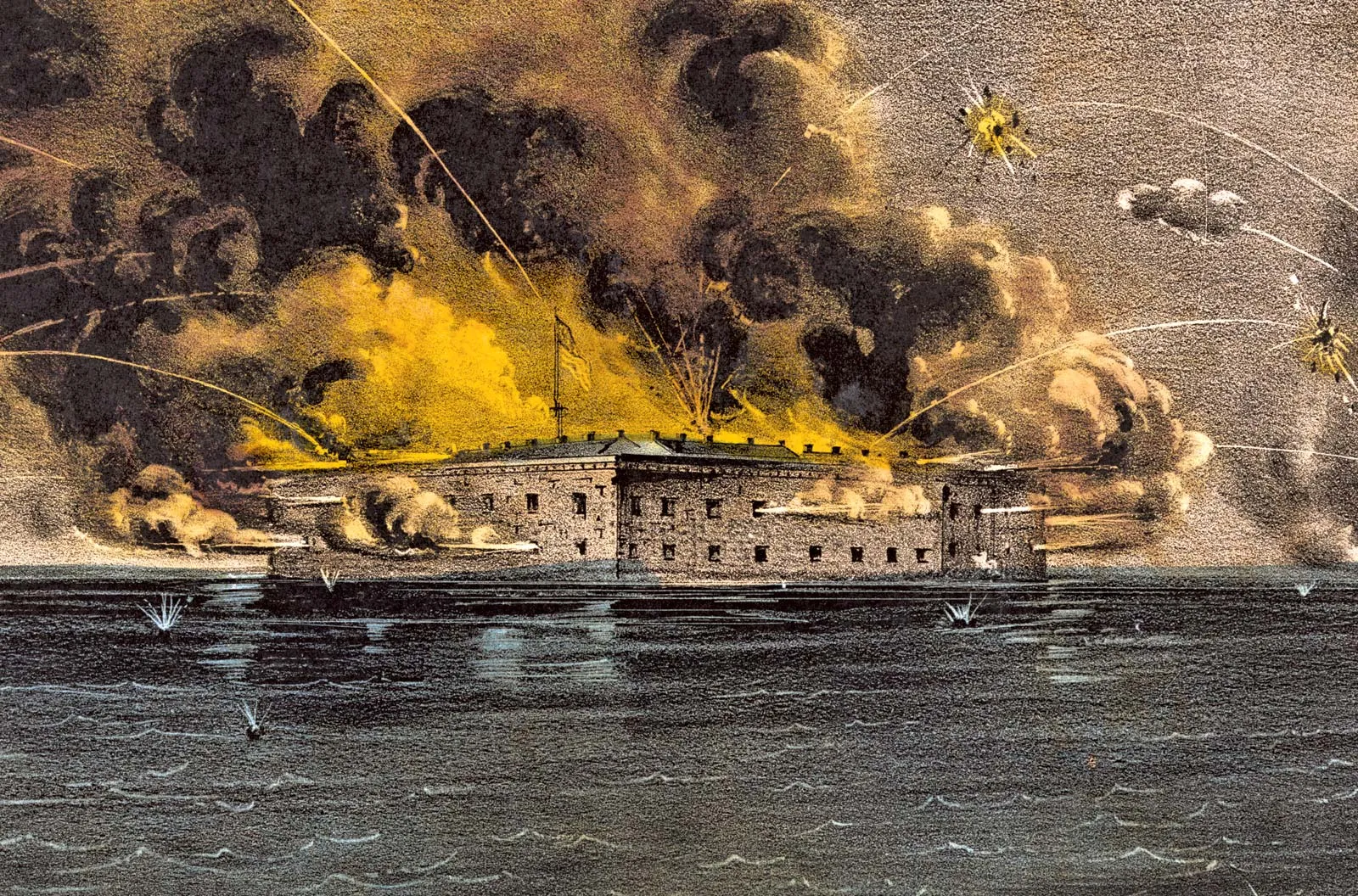
    On April 12, 1861, the first shots were fired at Fort Sumter. Cannons thundered for 34 hours. Anderson’s men had little food and no help coming. By April 13, he surrendered.

    No soldiers died in the fight itself. Still, the attack on Fort Sumter lit the spark. It was the start of four long years of war.

    In the history of Fort Sumter, this was more than a small fight. It was the spark that started the Civil War. That’s why the fort is still one of the most studied and visited places in America.

    When people ask, “What is Fort Sumter famous for?” the answer is simple. It’s famous for being the place where the Civil War began.

    The Significance of Fort Sumter

    When people search for Fort Sumter’s significance, they want more than the facts about what happened at Fort Sumter. They want to know why it mattered then, and why it still matters today.

    The battle was huge in meaning. It marked the official start of the Civil War. Before the attack, arguments over politics and state secession caused division. But no shots had been fired.

    That changed on April 12, 1861. The first cannon blast at Fort Sumter turned months of tension into open war. The event lit a fire across the nation. It pulled the North together. It pushed the South to fight harder.

    This one moment set off four brutal years of war. And it was this war that would shape the future of the United States. That is the true significance of Fort Sumter.

    So, what is the significance of Fort Sumter?

    • It symbolized the breakdown of compromise between North and South.
    • It forced both sides to move from negotiations to war.
    • It became a rallying point for Union resolve and Southern independence.

    Even today, historians emphasize Fort Sumter’s role in shaping the nation. In terms of the history of Fort Sumter, it is not only a fort in Charleston Harbor, but it is the rootage of America’s most defining war. That is what Fort Sumter is famous for and why its story continues to hold importance.

    People love to visit this place. Are you planning to do so? Book your Fort Sumter Tours Ticket now, in just 60 seconds.

    Fort Sumter’s Role in Civil War History

    To really understand Fort Sumter history, you have to look past April 1861. The fort’s story did not end after the first battle. Its role in the Civil War lasted for years.

    Many people focus only on what happened at Fort Sumter when the war began. But the fort stayed important long after the first shots. When Major Robert Anderson surrendered, Confederate troops moved in. They held Fort Sumter for almost four years. They built stronger walls and turned it into a symbol of Southern resistance.

    For the Union, taking the fort back became a key mission. From 1863 to 1865, Union forces attacked with ships and heavy guns. They blasted the walls, turning much of the fort into rubble. Yet, even then, the Confederates refused to give it up. The fort only fell when the Confederacy itself collapsed.

    In the history of Fort Sumter, this long fight showed the fort’s real value. It was more than brick and stone in Charleston Harbor. It stood for Confederate defiance. It stood for Union determination. And it proved why Fort Sumter’s location was important. Whoever held it controlled the sea route into Charleston, the city’s lifeline for trade and supplies.

    This lasting role is the heart of Fort Sumter’s significance in Civil War history. The fort fired the first shots, endured years of attacks, and returned to Union hands when the South fell. That legacy makes it one of the most studied and remembered landmarks in American military history.

    Fort Sumter Today

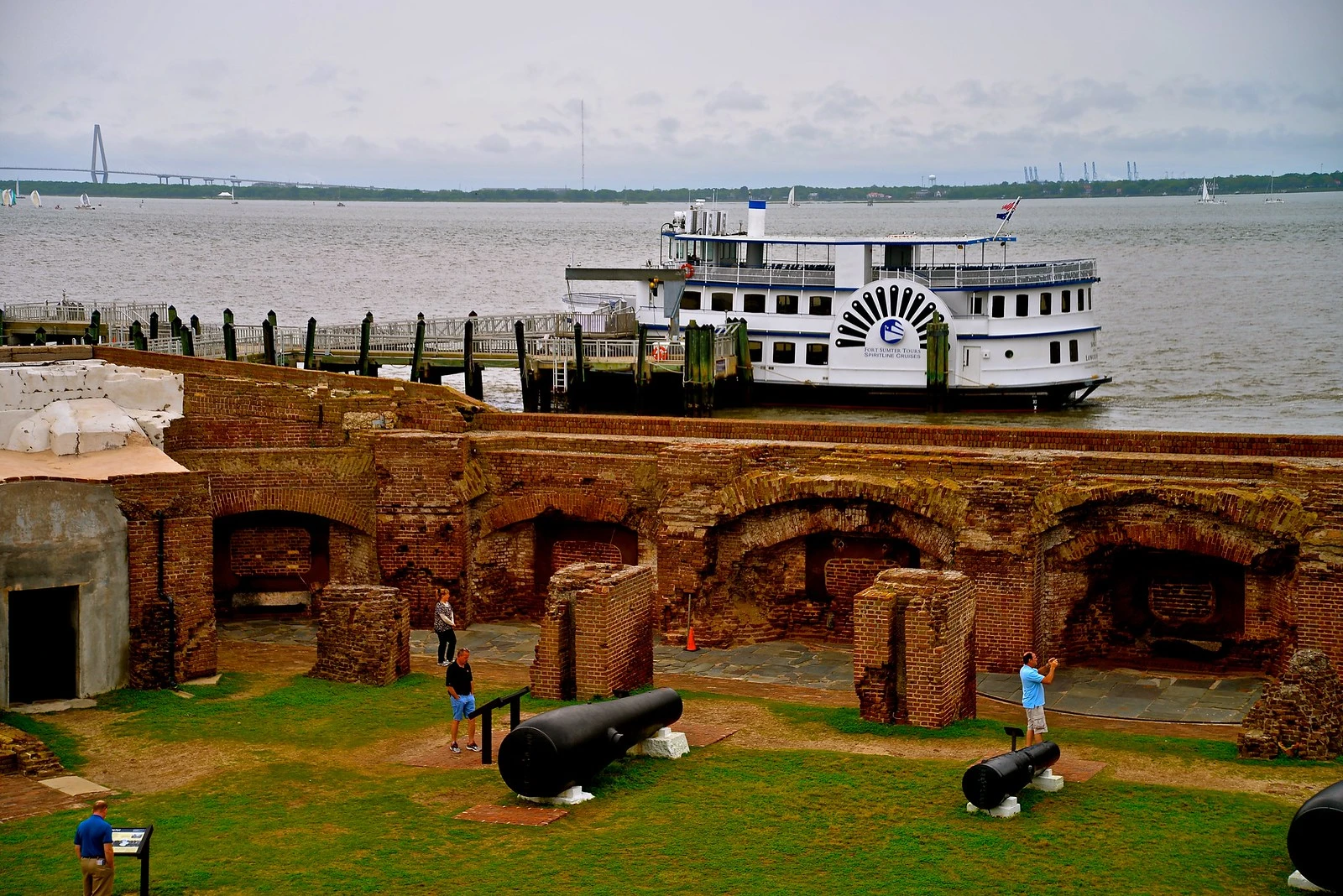
    The story of Fort Sumter’s history does not stop with the Civil War. Today, the fort stands as a protected national monument run by the National Park Service. People come to Charleston Harbor not just to see the ruins. They come to learn what happened at Fort Sumter and how it shaped the nation’s story.

    Fort Sumter Tours

    When exploring Fort Sumter, SC, history, visitors walk past the old brick walls and heavy cannons. They see displays that tell both Union and Confederate sides of the war. The fort feels like an open-air museum. It gives a direct link to the history of Fort Sumter and the very start of the Civil War.

    So, what is Fort Sumter famous for today? It is remembered as the place where the first shots of the war rang out. But its meaning now goes beyond battle. The fort is a place of learning and remembrance. It helps students, travelers, and historians think about the cost of division and the need for unity.

    By keeping the site alive, the National Park Service makes sure the significance of Fort Sumter is never lost. Visitors can stand where soldiers used to. They can see themselves why Fort Sumter’s location was important. And they can feel, on their own, how one fight in Charleston Harbor changed the path of American history.

    Conclusion

    To grasp Fort Sumter’s history, you have to see it as the starting point of the Civil War. When people ask, What happened at Fort Sumter, the answer is clear. This is where the first shots were fired. It was the moment political fights turned into a real war.

    The significance of Fort Sumter stretches far beyond one battle. Sitting in Charleston Harbor, the fort was a key stronghold. But it also became a national symbol—of division, of courage, and of change. That is what Fort Sumter is famous for, and why its story still matters in American history.

    When visitors explore Fort Sumter, SC, history, they walk through the old brick walls and see the scars left behind. The site shows how the past still shapes the present. Standing there makes the cost of war feel real. It also reminds us of the need for unity.

    In short, the history of Fort Sumter matters because it shows more than how a war began. It explains why the lessons from that war still speak to us today.
  • Beyond the Battle: 5 Overlooked Stories of Fort Sumter You’ve Never Heard

    Beyond the Battle: 5 Overlooked Stories of Fort Sumter You’ve Never Heard

    Fort Sumter Visitor Center

    Introduction: Why Fort Sumter’s Story Is More Than Just a Battle

    When many of us are asked about Fort Sumter, we think of the first shots of the Civil War. It’s in every history textbook. But, real talk is, there’s way more to that old fort than just the first shots.  We’re talking busted construction, wild survival stories, folks who never got a shout-out, and a whole lotta symbolism that sticks around. 

    So, buckle up, here’s the lowdown on five Fort Sumter stories that nobody ever talks about. Not the gunfire and smoke. This place? It’s a whole cocktail of struggle, memory, and the kind of grit that keeps people coming back for more.

    1. The Untold Fort Sumter Story of Its Construction

    Even before the Civil War, Fort Sumter had a story. The place was already knee-deep in wild stories and headaches way before the first cannonball flew. Supposedly built to guard Charleston Harbor, yeah, easier said than done. The construction process? Total mess. Tons of setbacks and bizarre problems you don’t usually hear about in the usual history books.

    Some facts about its construction:

    • Artificial foundation: Workers built the fort on a man-made island, using 70,000 tons of granite shipped from New England.
    • Labour force: Arrested African Americans and contracted labourers carried out much of the backbreaking work.
    • Planned objective: It was finished by the U.S. government in 1829 as part of a defensive program after the War of 1812.
    • Incomplete at war’s start: By April 1861, Fort Sumter was still half done, which resulted in a lack of supplies and defences.

    Fort Sumter’s building story shows how important it was for the country and how much work went into it. It was more than just a place for fighting. The fort itself tells a story of bold building plans, hard labour, and the nation’s push to stay safe.

    2- Human Stories of Fort Sumter: Life Inside the Fort

    The Story of Fort Sumter is not just about men firing cannons. It is just as much about the day-to-day lives of men within its walls. Within their letters, diaries, and accounts is discovered a lesser-told aspect of historical proceedings.

    Life inside the fort included:

    • Tight conditions: Soldiers lived in narrow quarters with very little or no privacy. Space was limited, and overcrowding made daily routines almost impossible.
    • Food shortages: Supplies ran really, really low before the April 1861 bombardment. Soldiers ate salted pork, hardtack, and small rations of rice again and again.
    • Constant stress: Troops lived under the shadow of attack. Every sound from Charleston could mean the start of conflict.
    • Small comforts: Besides hardships, soldiers passed the time writing letters home, playing cards, or sharing stories to maintain morale.

    One soldier wrote about nights of uneasy quiet, broken only by the sea and the worry of what morning might bring. These words remind us that Fort Sumter’s story belonged to common men, not just leaders. A visit to the island shows this side clearly. Book your Fort Sumter Tours tickets in just 60 seconds.

    Their experience makes the fort more than a battlefield. It becomes a place where fear, hunger, and resilience shaped the human side of the conflict.

    3- The Forgotten African American Role in the Story of Fort Sumter

    Another unsung page of the Fort Sumter saga is that of African Americans. Even though nearly every volume dwells on generals and strategies of war, African American slaves and freedpeople acted prominently and uniquely in fort history.

    Some roles often left out of the Fort Sumter story:

    • Construction labour: Enslaved African Americans carried much of the heavy work, moving granite, mixing mortar, and laying bricks to build the artificial island base.
    • Harbor support work: Many enslaved men and women supported Charleston’s harbour economy, which directly enabled the fort’s military supply lines.
    • Military service: After the Emancipation Proclamation, African American soldiers joined the Union Army. The 54th Massachusetts Regiment, one of the first Black regiments, fought in nearby battles around Charleston, keeping Fort Sumter at the centre of their struggle for freedom.
    • Symbol of emancipation: For freedmen and abolitionists, Fort Sumter became more than a fortress; it was a symbol of slavery’s collapse and a new future for African Americans.

    Without considering these contributions, the story of Fort Sumter cannot be told in all of it. African Americans’ labour and further sacrifices prove how important they were to the construction of the fort as well as to its legacy, both during and after the Civil War.

    4- The Silent Years: Fort Sumter After the Famous Battle

    So here’s the thing, everybody acts like Fort Sumter was just a one-and-done deal after those first shots rang out in April 1861. Like, cannonballs fly, war kicks off, and then…end credits for the fort. But nooo, the place didn’t just fade out after the smoke cleared. That pile of bricks stuck around for years, getting shelled, crumbling a bit, and basically morphing into something way different than what it started as. People forget that part, Fort Sumter’s story kept going, long after the headlines moved on.

    What happened to Fort Sumter after the battle:

    • Confederate control: After Union forces surrendered, Confederate troops occupied the fort and strengthened its defences.
    • Relentless bombardment: From 1863 to 1865, Union artillery pounded Fort Sumter with more than 7 million pounds of projectiles, leaving the fort in ruins but never fully retaken by force.
    • Symbol of resistance: Despite its shattered walls, Confederates held it until February 1865, when General Sherman’s march through the South forced their withdrawal.
    • Reconstruction era: After the war, the fort stood as a ruin. It later became a symbol of Union victory and national memory.

    Even when the place was pretty much a pile of rubble, it turned into this hardcore symbol. Even in ruins, the fort stood as a strong sign of survival, resistance, and the Union’s final victory.

    5- A Symbol Beyond the War: The Story of Fort Sumter in American Memory

    Its tale did not close with the Civil War. As years rolled on, the fort changed from a war post into a lasting emblem of togetherness, loss, and memory.

    How Fort Sumter became part of American memory:

    • Post-war symbolism: For Union veterans, the ruined fort represented victory and the preservation of the nation.
    • Flag raising in 1865: After the Confederacy’s defeat, Major Robert Anderson returned to Fort Sumter to raise the same flag he had lowered in 1861. This ceremony turned the fort into a symbol of resilience and national pride.
    • 20th-century preservation: By the early 1900s, Fort Sumter was recognized as a historic site. Congress announced it as a national monument in 1948.
    • Modern importance: Today, the National Park Service manages the site, welcoming thousands of visitors who want to connect with the story of Fort Sumter as more than just the spark of war.

    Fort Sumter turned into more than bricks and guns. It became a living reminder of struggle, grit, and the slow mending of a divided nation.

    Conclusion: Why These Stories of Fort Sumter Matter

    People often shrink Fort Sumter’s story to just one moment, the opening shots of the Civil War. But its past stretches far wider. From bold building plans to the daily lives of soldiers, the overlooked part played by African Americans, the long years under fire, and its place as a lasting marker in America’s memory, Fort Sumter carries many layers of meaning that reach far past the fight itself.

    Key Points from the Fort Sumter story:

    • It was built on innovation, labour, and sacrifice long before the war began.
    • Soldiers go through hunger, fear, and unsurity inside its walls.
    • African Americans shaped both its construction and its legacy of freedom.
    • The fort’s ruins carried symbolic weight throughout the war and into Reconstruction.
    • Today, it is a site of remembrance and national reflection.

    By looking past the cannons, we discover that the story of Fort Sumter is not just about war; it is about people, perseverance, and memory. These stories remind us that history is richer, more complex, and far more human than a single battle.

  • How Many People Died at Fort Sumter? Facts, Myths, and Casualties Explained

    How Many People Died at Fort Sumter? Facts, Myths, and Casualties Explained

    Battle of Fort Sumter

    Fort Sumter in Charleston Harbor, South Carolina, is where the American Civil War gets underway. While widely remembered as important in strategy as in symbolism, many wonder aloud this question: how many people died at Fort Sumter? Surprisingly, the deaths were far fewer than most remember in light of the conflict that followed in later battles. 

    This blog explains the facts, separates truth from legend, and gives precise numbers on casualties. Read this, and you will then know exactly how many people died in the Battle of Fort Sumter and a lot more… 

    CategoryDeathsNotes
    Union Soldiers2Private Daniel Hough and Private Edward Galloway; accidental cannon misfire after surrender
    Confederate Soldiers0No fatalities during the battle
    Total Casualties2All deaths were Union soldiers; no combat deaths

    Understanding the Battle of Fort Sumter

    To accurately answer how many people were killed in Fort Sumter, we first need to understand the battle itself.

    • Date and Duration: April 12–14, 1861. The bombardment lasted 34 hours.
    • Belligerents: Confederate forces under General P.G.T. Beauregard attacked Union forces commanded by Major Robert Anderson.
    • Goal: The Confederacy desired to capture Fort Sumter to assert its authority and give a warning that hostilities were to begin.
    • Combat Overview:
      • Confederate artillery fired over 4,000 rounds at the fort.
      • Union defenders returned fire, but damage was very limited due to the fort’s strong construction.
      • No ground assault occurred; the battle consisted completely of artillery exchanges. 
    • Immediate Outcome: Major Anderson surrendered on April 14, allowing Confederate forces to occupy the fort without heavy direct combat casualties.

    Understanding the nature of this battle is very important. Unlike many later Civil War engagements, Fort Sumter’s fight involved heavy artillery but, yeah, minimal direct combat, which explains the wonderfully low number of deaths.

    How Many People Died in the Battle of Fort Sumter?

    When asking how many people died in the Battle of Fort Sumter, many assume the casualties were high. Reality is that death rates were very low, especially given later battles in the Civil War.

    Fort Sumter Casualty Figures

    • Total deaths: 2
      • Both were Union soldiers.
    • Cause of death:
      • The deaths were unintentional. To be precise, a cannon backfired while firing a salute after the surrender, killing two men.
    • Confederate deaths: 0
      • No Confederate soldiers were killed during the bombardment.

    Important Points to be Noted

    • The battle caused no combat fatalities.
    • Most Union soldiers survived the bombardment with pretty minor injuries.
    • The low death count is why historians tend to label the Battle of Fort Sumter as symbolic instead of a bloody start to the Civil War.

    Why the Numbers Surprise People

    • Popular culture often depicts the battle as deadly because it marked the start of the Civil War.
    • In reality, the many soldiers who died in Fort Sumter is far lower than in typical Civil War engagements, where, like, hundreds or thousands died.

    By grasping these figures, you can separate fact from myth and obviously gain a clear picture of how many people were actually killed in Fort Sumter.

    How Many Soldiers Died in Fort Sumter?

    Now, how many soldiers died in Fort Sumter? People ask as if that figure is somehow distinct from the overall number. 

    Breakdown of Soldier Deaths

    • Union soldiers: 2
      • Both deaths occurred after the formal surrender during a cannon salute.
      • No Union soldiers died in direct combat.
    • Confederate soldiers: 0
      • Confederate forces reported no fatalities during the battle.

    Injuries vs. Fatalities

    • Many Union soldiers got minor injuries from artillery fire.
    • No major injuries were reported on the Confederate side.

    Why So Few Soldiers Died

    • The battle involved artillery exchanges instead of close-quarters combat.
    • The fort’s strong defensive construction prevented the deaths.
    • No infantry assaults occurred, which are typically the deadliest aspect of Civil War battles.

    Who Died at Fort Sumter?

    Union Soldiers Who Lost Their Lives

    It’s clear that both deaths were due to accidents. Name and a bit of information is given below:

    • Private Daniel Hough
      • The first soldier to die at Fort Sumter.
      • Killed accidentally during a cannon salute after the fort’s surrender on April 14, 1861.
    • Private Edward Galloway
      • Died in the same cannon accident as Hough.
      • His death, like Hough’s, was a tragic accident, not combat-related.

    Confederate Casualties

    • No Confederate soldiers died during the battle.
    • All fatalities at Fort Sumter occurred on the Union side.

    Common Myths About Deaths at Fort Sumter

    Many people overestimate the number of deaths in the Battle of Fort Sumter due to its importance as the Civil War’s opening conflict. Here are the most common myths, and the facts, too.

    Myth 1: Fort Sumter Was a Bloody Battle

    • Reality:
      • Only 2 Union soldiers died, both from a cannon accident after surrender.
      • No Confederate soldiers died during the battle.
      • In spite of the heavy artillery fire, the fort’s strong defenses stopped combat fatalities.

    Myth 2: Many Soldiers Were Killed in Combat

    • Reality:
      • They were lost to accidents, non-battle casualties.
      • Injuries occurred, but no soldiers were actually killed in active combat.

    Myth 3: The Battle’s Death Toll Equals Later Civil War Battles

    • Reality:
      • Casualties at Fort Sumter were like, seriously low.
      • Later battles, such as Bull Run and Antietam, saw hundreds or thousands of soldiers killed. All this makes Fort Sumter’s death toll minimal in comparison.

    Why These Myths Persist

    • People normally consider Fort Sumter as the start of the Civil War, which definitely led them to assume high death rates.
    • And the media, all dramatic effect, you know!

    Why Union Deaths Were So Low

    • Fort Sumter was built strongly, so it wasn’t easy to attack.
    • The fight was mostly cannons firing back and forth, not soldiers charging.
    • The only Union deaths came from accidents, not the battle itself.

    Summary of Fort Sumter Casualties

    To answer how many people died in Fort Sumter clearly, here’s a consolidated view of the battle’s fatalities.

    Important points

    • How many people died in the Battle of Fort Sumter? Only 2.
    • Both of them (deaths) were accidental, not caused by combat.
    • Fort Sumter had no Confederate fatalities.
    • The low death toll makes Fort Sumter a symbolic, but not deadly, opening of the Civil War.

    Perspective

    • Later Civil War battles killed hundreds or even thousands, but Fort Sumter had almost no deaths.
    • Knowing the real numbers clears up myths and false stories.

    And yeah, wanna know how all this battle went? What happened and what not? Do read our blog “The Battle of Fort Sumter”. 

  • A Visitor’s Guide to Fort Sumter: Tours, Hours, and How to Get There

    A Visitor’s Guide to Fort Sumter: Tours, Hours, and How to Get There

    Fort Sumter is situated on the approach to Charleston Harbor and remains one of the most important Civil War sites. Today’s visitors are interested in the site due to their interest in its history, architecture, and unique waterfront location.

    Fort Sumter Tours

    To plan your visit, you’ll want to understand the basics: how to get to Fort Sumter, Fort Sumter hours, and what to know when visiting. Here is the information in plain, practical terms to plan your visit.

    How to Get to Fort Sumter

    Many visitors ask, “How do you get to Fort Sumter?” Easy to answer that: by boat only. You will board ferries offered by Fort Sumter Tours that leave every day from two points:

    • Liberty Square in downtown Charleston: the most convenient for those staying in the city.
    • Patriots Point in Mount Pleasant:  a good choice if you want to combine your trip with the Patriots Point Naval & Maritime Museum.

    The ferry trip will take approximately 30 minutes one way and has beautiful vistas of Charleston Harbor. Safe seating, restrooms, and indoor/outdoor viewing spaces enable the trip to be convenient for families and crowds. Wanna book? Get your Fort Sumter Tours ticket now!

    Rapid info on the ferry to Fort Sumter:

    • It is only accessed by official ferries.
    • Round-trip time: approximately 2 hours and 15 minutes, including time to visit the fort.
    • Vittles and drinks are available for sale onboard.
    • They will have to pre-purchase tickets, especially during peak seasons.

    By planning ahead, you’ll avoid delays and secure your spot on the ferry.

    Fort Sumter Tours

    Each trip to the fort starts with taking the ferry, yet when you are there, you can decide how to visit. Tours mix history with choice, so you may visit on your own schedule or hear expert interpretation.

    What’s Included in a Fort Sumter Tour

    • Round-trip Patriots Point or Liberty Square Ferry use
    • Commentary throughout the boat tour, chronicling Charleston Harbor’s history
    • Time to spend visiting the fort after your arrival
    • Access to museum displays and interpretive presentations

    Types of Experiences

    • Self-guided tour: Walk the grounds, read signs, and see historic cannons.
    • Ranger presentations: Park rangers will normally provide short presentations about the fort’s role in the American Civil War.
    • Educational programs: Schools, as well as history buffs, can schedule special advance tours.
    Cannon on Fort Sumter

    Duration

    The whole tour normally lasts about 2 hours and 15 minutes. This includes the ferriage (30 minutes each way) as well as about one hour inside Fort Sumter.

    It is ideal to pre-book tickets to secure your desired time of departure. Peak seasons, particularly spring and summer, are snapped up very early.

    Fort Sumter Hours of Operation

    Before you plan to visit, you will want to check Fort Sumter hours as well as ferries. There is no drive to the fort, so your visit is entirely dependent upon the official service ferry.

    Standard Hours

    • Morning departures usually begin around 9:30 AM.
    • Afternoon departures run until mid to late afternoon.
    • Each tour lasts about 2 hours and 15 minutes, including ferry travel and time inside the fort.

    Seasonal Variations

    Fort Sumter hours vary as per season and sunlight. Summer has more departures in comparison, while the schedule in the cold season has fewer.

    Holiday Schedule

    • Closed on Thanksgiving Day, Christmas Day, and New Year’s Day
    • Open on all other federal holidays

    To have up-to-date information, always cross-check your time of departure when purchasing your tickets. You will then show up early at your point of disembarkation so that your journey is not disrupted.

    Tickets and Pricing

    Payment for entry to ferries to visit the fort is mandatory. If you pay for ferries, then access to the fort is free.

    Where to Buy Tickets

    • Online: Recommended for sure-shot booking, particularly in peak seasons.
    • On-site: Tickets are available to buy at Patriots Point or Liberty Square, though same-day sales tend to run out.

    Ticket Costs (Approximate)

    • Adults (ages 12–61): Around $35
    • Children (ages 4–11): Discounted rate
    • Seniors (ages 62+): Reduced fare
    • Children under 3: Free

    Important Notes

    • Admission includes a return ferry boat trip as well as admission to the fort.
    • They offer group rates for schools or big parties.
    • Plan ahead-tickets tend to run out early during spring break and summer.

    Advanced booking provides your desired time to depart as well as last-minute anxiety relief.

    What to Expect When Visiting Fort Sumter

    A visit to Fort Sumter is history as well as scenery. Once you disembark from the ferry, you will discover much to see in a small but significant location.

    Historical Highlights

    • Civil War significance: The first shots in the war were fired here in April 1861.
    • Preserved artifacts: Remains from the original fort are cannons, walls, and ruins.
    • Museum displays: Exhibits describe the construction of the fort, battles, and restoration.

    Visitor Facilities

    • Restrooms: Located on-site for your convenience.
    • Gift shop: Offers books, souvenirs, and educational materials.
    • Interpretive signage allows you to navigate and discover as you stroll through the grounds.

    Accessibility

    • Wheelchair access is available on ferries and within most areas of the fort.
    • Seating is limited, so plan breaks during your visit.

    Pro Tips for a Smooth Visit

    • Wear comfortable shoes; the trails are rocky in places.
    • Pack in water, particularly in summer.
    • Take at least half a day if you are combining Fort Sumter with other Charleston attractions.

    Plan Your Visit to Fort Sumter

    Good planning makes your trip run smoothly. Other than checking the hours in Fort Sumter and buying your ferry tickets, here are other details to plan for before your trip.

    Best Time to Visit

    • Spring and fall: Pleasant weather and fewer crowds.
    • Summer: Longer hours but hotter temperatures and busier ferries.
    • Morning departures: Offer cooler temperatures and better lighting for photos.

    Parking Information

    • Liberty Square: Public parking garages are within walking distance.
    • Patriots Point: Large parking lot available, with a daily fee.

    Weather Considerations

    Ferry schedules may change if storms or strong winds affect the harbor. Always confirm your departure time on the day of your visit.

    Suggested Itinerary

    • Start early: Take a morning ferry for cooler weather.
    • Explore the fort: Spend about one hour inside.
    • Plan nearby activities: Pair your trip with a visit to the Charleston waterfront or Patriots Point Naval & Maritime Museum.

    With a little preparation, you’ll maximize your time at Fort Sumter and enjoy both the journey and the destination. Start your trip. Book Fort Sumter Tickets now!

    Final Thoughts

    Visiting Fort Sumter is one of the most excellent means to feel Charleston’s history firsthand. Because the fort can only be accessed by ferry, understanding how to get to Fort Sumter, recognizing the hours of Fort Sumter, as well as reserving tickets ahead of time is essential to a smooth visit. 

    Whether you board from Liberty Square or Patriots Point, the trip provides beautiful harbor scenery and a memorable return to Civil War heritage. Book in advance, select your time of day to board, and get ready for a half-day excursion that incorporates education, sightseeing, and an unusual historical attraction.

  • Facts About the Battle of Fort Sumter; Why It Was Important

    Facts About the Battle of Fort Sumter; Why It Was Important

    The Battle of Fort Sumter marked the formal start of the American Civil War. Fought in Charleston Harbor, South Carolina, in April 1861, this short yet decisive engagement came in the four-year war that divided the United States.

    Battle of Fort Sumter

    Tourists, pupils, and history enthusiasts usually inquire thus: What was the Battle of Fort Sumter? Who won the Battle of Fort Sumter? Why was it so important? This page gives you direct, reliable answers.

    At a glance:

    • Fort Sumter date: April 12–13, 1861
    • Location: Charleston Harbor, South Carolina
    • Duration: 34 hours
    • Result: Confederate victory
    • Why it matters: It marked the beginning of the Civil War

    What Was the Battle of Fort Sumter?

    The Fort Sumter Battle started when Confederate troops opened fire on one of the Union fortresses in Charleston Harbor. Major Robert Anderson, who was in charge, was faced with Confederate General P.G.T. Beauregard’s troops. 

    This attack on Fort Sumter took nearly 24 hours. Despite prolonged shelling, no soldier perished. Nonetheless, the fact that Union troops surrendered sealed the end to any sort of compromise between North and South.

    Key facts:

    • The war of Fort Sumter was not the bloodiest battle, but it was the most symbolic.
    • The first shots of the Civil War were fired here.
    • The Union defeat and the surrender of Fort Sumter instilled fresh vigor into the Confederacy and compelled President Abraham Lincoln to summon 75,000 troops.

    Briefly, the Battle of Fort Sumter was the spark that kindled the most defining American historical conflict.

    When Was the Battle of Fort Sumter?

    The Battle of Fort Sumter occurred between April 12-13, 1861, in Charleston Harbor in South Carolina. These are noted dates because this is where, technically, the Civil War started.

    • Fort Sumter date: April 12–13, 1861
    • Location: Charleston Harbor, South Carolina
    • Duration: 34 hours

    The attack on Fort Sumter began at 4:30 a.m. on April 12, when Confederate artillery opened fire on the Union garrison. The bombardment continued throughout the day and into the next, until Union Major Robert Anderson surrendered on April 13.

    Why these dates matter:

    • They represent the moment the war of Fort Sumter transformed political tension into open conflict.
    • They answer the question: “When was the Battle of Fort Sumter?”, a top search query for history learners.
    • They show how quickly the situation moved from a standoff to the fall of Fort Sumter and the first Confederate victory.

    The Fort Sumter battle did not merely happen on any particular day; it happened at the exact same time that the compromise failed to hold, and the United States split into war.

    Where Were the First Shots of the Civil War Fired?

    The first shots of the Civil War were fired at Fort Sumter in Charleston Harbor, South Carolina, on April 12, 1861. Confederate artillery opened fire on the Union-held fort at 4:30 a.m., the start of the attack on Fort Sumter.

    This day is important as it brought to an end all the headaches that existed between North and South and transformed political differences into open war. The Fort Sumter battle immediately became the symbol of a divided nation.

    Important details:

    • Location: Charleston Harbor, South Carolina
    • Event: Confederate forces fired on Union Major Robert Anderson’s garrison
    • Result: After 34 hours, Union troops surrendered, marking the fall of Fort Sumter
    • Importance: It confirmed the beginning of the Fort Sumter Civil War conflict

    Who Won the Battle of Fort Sumter?

    The Battle of Fort Sumter was won by the Confederates. After being under siege for 34 hours without any interruption, Union Major Robert Anderson surrendered the fort on April 13, 1861.

    This outcome is often searched as “Who won the battle of Fort Sumter?” or “Fort Sumter, who won the battle?” The answer is straightforward: the Confederacy took control of the fort.

    Details:

    • Union commander: Major Robert Anderson
    • Confederate commander: General P.G.T. Beauregard
    • Result: Union forces surrendered and retreated
    • Casualties: No combat deaths during the Fort Sumter battle
    • Aftermath: The fall of Fort Sumter lifted Confederate spirits while encouraging President Lincoln to place Union troops in motion

    Why it matters:

    • The attack on Fort Sumter showed the Confederacy’s willingness to use force.
    • The war of Fort Sumter shifted from political debate to military conflict.
    • The Confederate victory made the Civil War unavoidable.

    Who Were the Generals of the Battle of Fort Sumter?

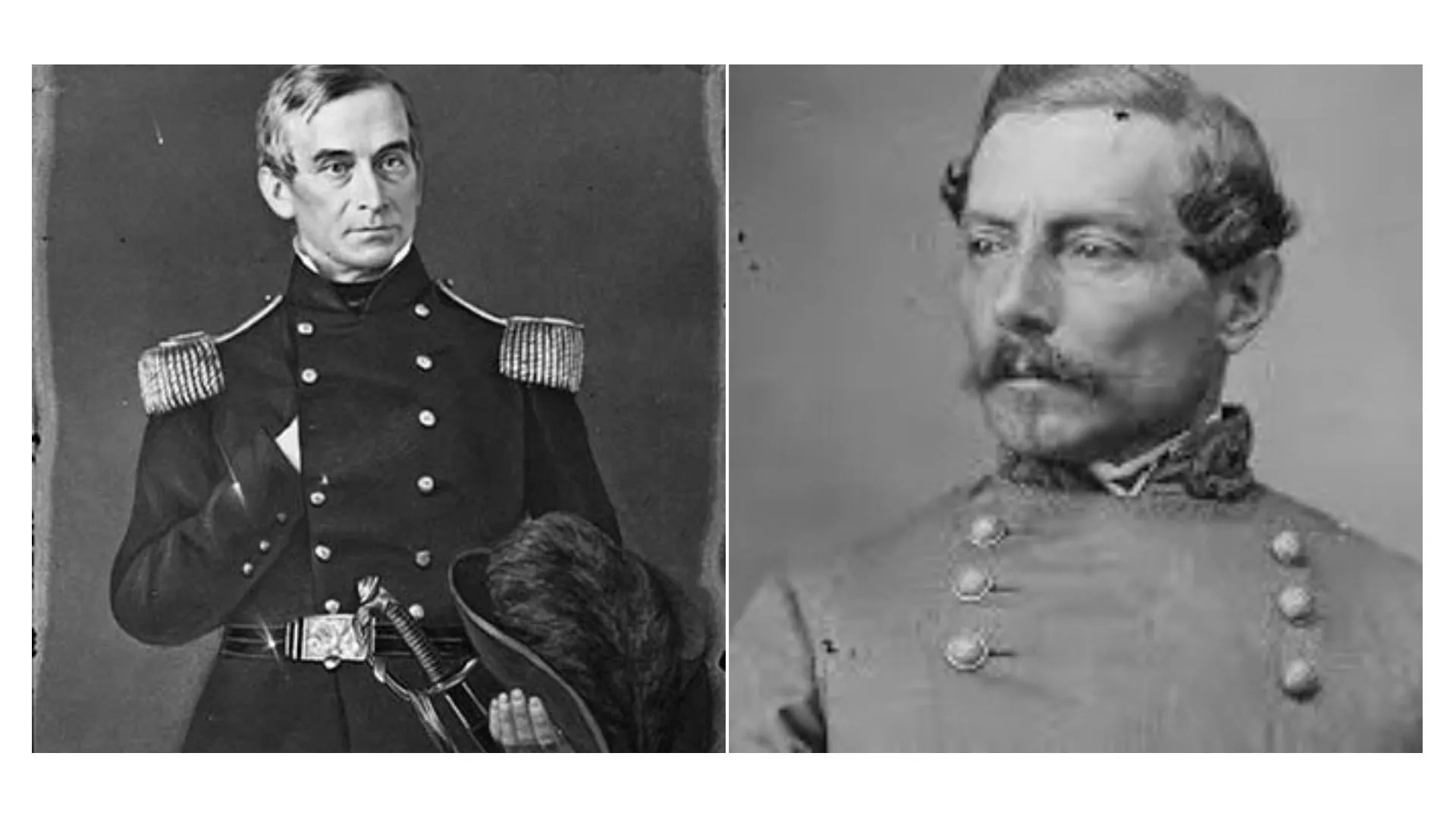
    Generals of battle of fort sumter: Major Robert Anderson and General P.G.T. Beauregard
    Major Robert Anderson and General P.G.T. Beauregard

    Two main military leaders were there, the head of the Battle of Fort Sumter:

    • Union Commander: Major Robert Anderson
      • Led the Union garrison at Fort Sumter.
      • Defended the fort for 34 hours before surrendering.
      • His decision to hold the fort symbolized Union resistance at the start of the Fort Sumter Civil War conflict.
    • Confederate Commander: General P.G.T. Beauregard
      • Directed the attack on Fort Sumter.
      • Ordered the artillery bombardment that forced the Union surrender.
      • Gained prestige after the fall of Fort Sumter, as the Confederacy celebrated its first victory.

    Things to remember:

    • These two generals were also formerly in connection with each other; Beauregard being Anderson’s artillery student at West Point.
    • They represent the personal conflicts of the war of Fort Sumter, in which former partners fought on either side.
    • Understanding “who were the generals in the Battle of Fort Sumter” provides insight into leadership in the early stages of the Civil War.

    In short, Major Robert Anderson commanded the North in the Fort Sumter Battle while General P.G.T. Beauregard headed the South–two individuals whose actions brought four years of conflict.

    How Long Did the Battle of Fort Sumter Last?

    The Battle of Fort Sumter lasted 34 hours, from the morning of April 12, 1861, to the afternoon of April 13, 1861.

    Details of the timeline:

    • April 12, 1861, 4:30 a.m., Confederates opened fire, starting the attack on Fort Sumter.
    • The artillery shelling persisted throughout the day and into the night.
    • April 13, 1861, early afternoon – Major Robert Anderson surrendered.
    • The fall of Fort Sumter provided the Confederacy with its first victory in the Civil War.

    The Fall of Fort Sumter

    The fall of Fort Sumter occurred on April 13, 1861, when Union Major Robert Anderson surrendered to Confederate General P.G.T. Beauregard. After a 34-hour bombardment, the Union garrison could no longer hold the fort.

    Why Was the Battle of Fort Sumter Important?

    The Battle of Fort Sumter was important because it officially commenced the Civil War. Though the Fort Sumter Battle was short and didn’t inflict heavy casualties, politically and militarily speaking, its impact was phenomenal.

    Reasons why the attack on Fort Sumter mattered:

    • Start of the Civil War: The shots that were exchanged at Fort Sumter put an end to deliberation and thrust the country into conflict.
    • Shift from politics to conflict: The slave-holders versus states’ rights tension that brewed for months boiled over into open fighting.
    • Union reaction: Following the fall of Fort Sumter, President Lincoln requested 75,000 troops, revealing the willingness to use force by the Union.
    • Confederate momentum: A Southern success in the Fort Sumter Battle lifted Southern morale and solidified their stance.

    In short, the battle of Fort Sumter was small in scale but massive in consequence. It transformed political disputes into the war of Fort Sumter and set the stage for one of the most defining conflicts in American history.

    Bold Facts About the Battle of Fort Sumter

    The Battle of Fort Sumter was not any ordinary military combat, but rather that seminal event that ignited the American Civil War. Its significance can best be characterized by the most crucial facts and events as follows:

    • Fort Sumter Date: The battle began on April 12, 1861, and ended on April 13, 1861.
    • Where were the first shots of the Civil War fired? At Fort Sumter in Charleston Harbor, South Carolina.
    • How long did Fort Sumter last? The fight lasted 34 hours, with continuous Confederate bombardment.
    • Who were the generals of the Battle of Fort Sumter?
      • Confederacy: General P.G.T. Beauregard led the attack.
      • Union: Major Robert Anderson commanded the fort’s defenders.
    • Who won the Battle of Fort Sumter? The Confederacy forced the Union garrison to surrender.
    • Casualties: Remarkably, there were no combat deaths during the battle, though two Union soldiers died in an accidental explosion after the surrender.
    • Fall of Fort Sumter: The Union surrendered the fort to Confederate forces, marking the first Confederate victory of the war.

    Facts of the Battle of Fort Sumter

    • First Battle of the Civil War.
    • Lasted 34 hours.
    • No combat deaths.
    • Confederate victory.
    • Sparked a war that lasted four years.

    So, yeah, the Battle of Fort Sumter remains one of the most important turning points in American history, remembered as the clash that set the stage for the War of Fort Sumter and the broader Civil War. Do you plan to visit Fort Sumter? Check out how you can through our blogs “How to get to Fort Sumter?